I was asked recently why I don’t host my videos on YouTube.
Well, it wasn’t for lack of trying. Apparently, somewhere in the bowels of YouTube’s enormous technological empire, I’m considered a menace to society. And it all started with a Christmas tree.
I’ve always seen things a little differently than most people, which might explain some of the rather odd videos I’ve made over the years. Most have gone over reasonably well with family and friends. Others have left people wondering whether I should be allowed near a computer.
Last Christmas, I managed to produce one that got me banned from YouTube.
It seemed like a sure-fire winner at the time.
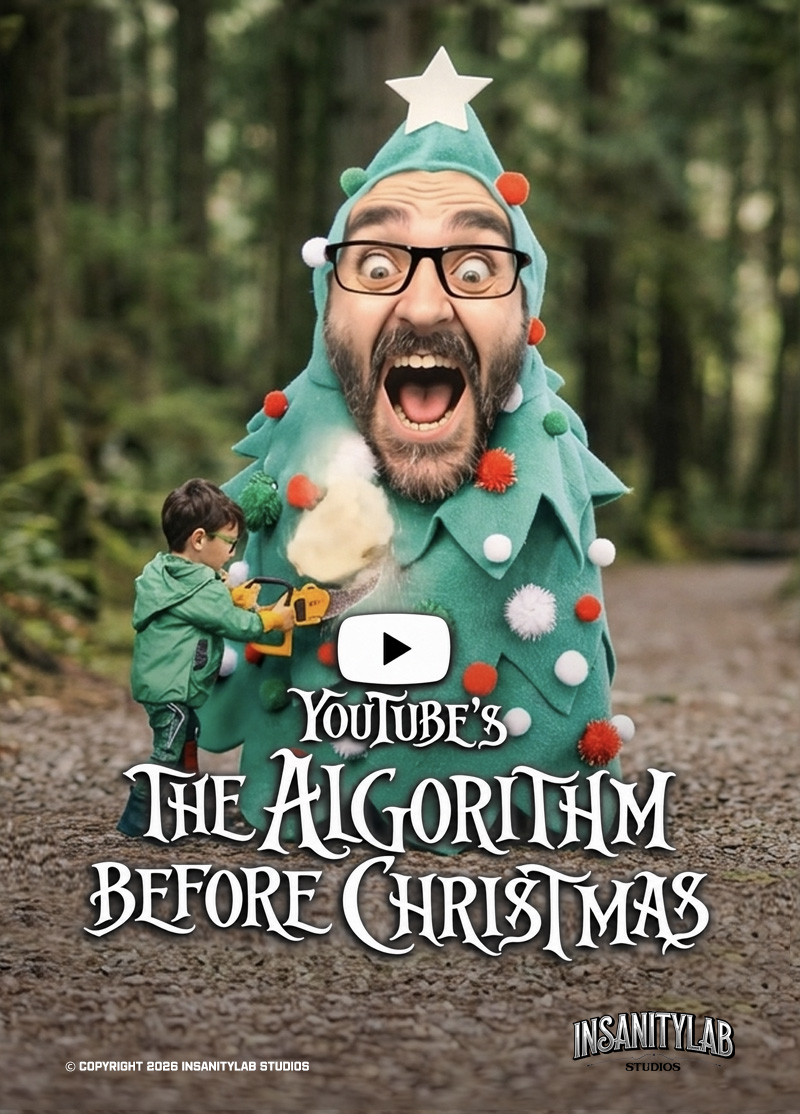
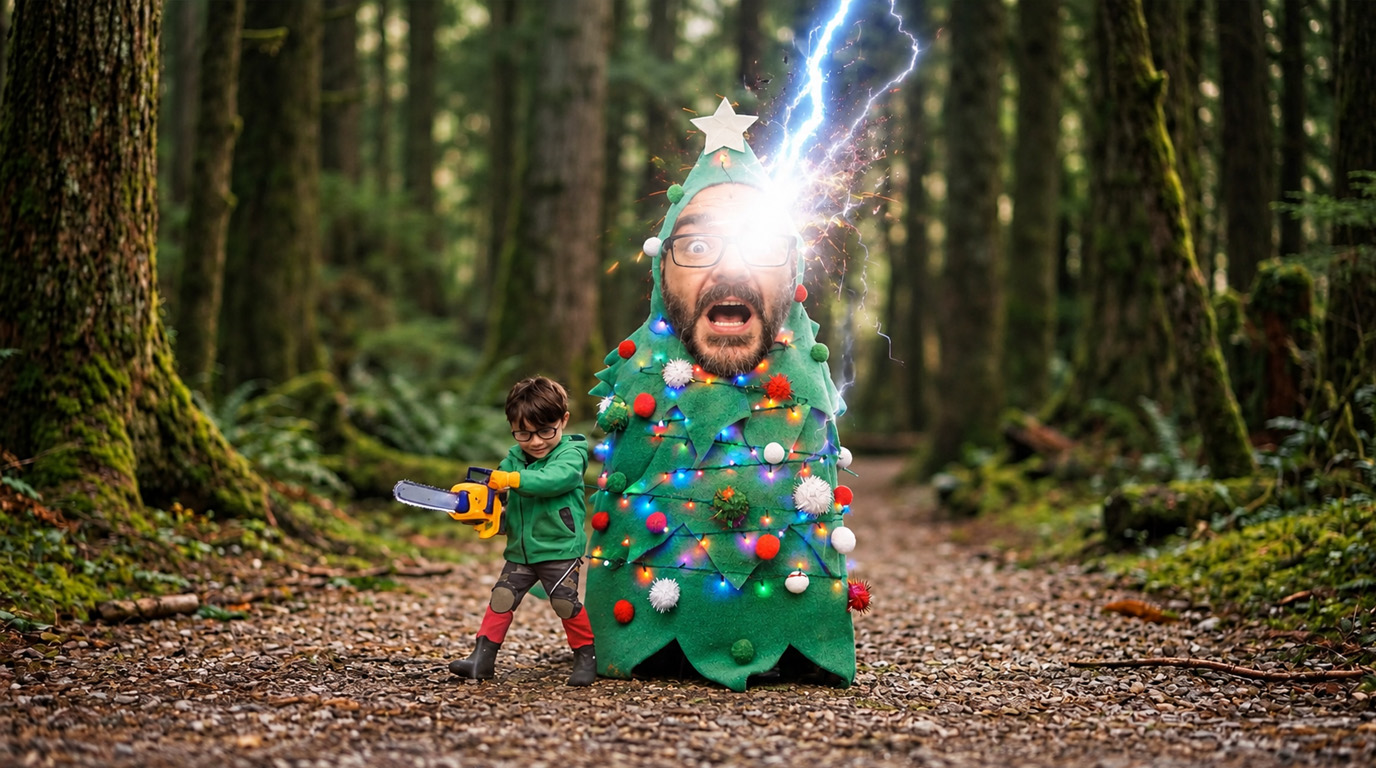
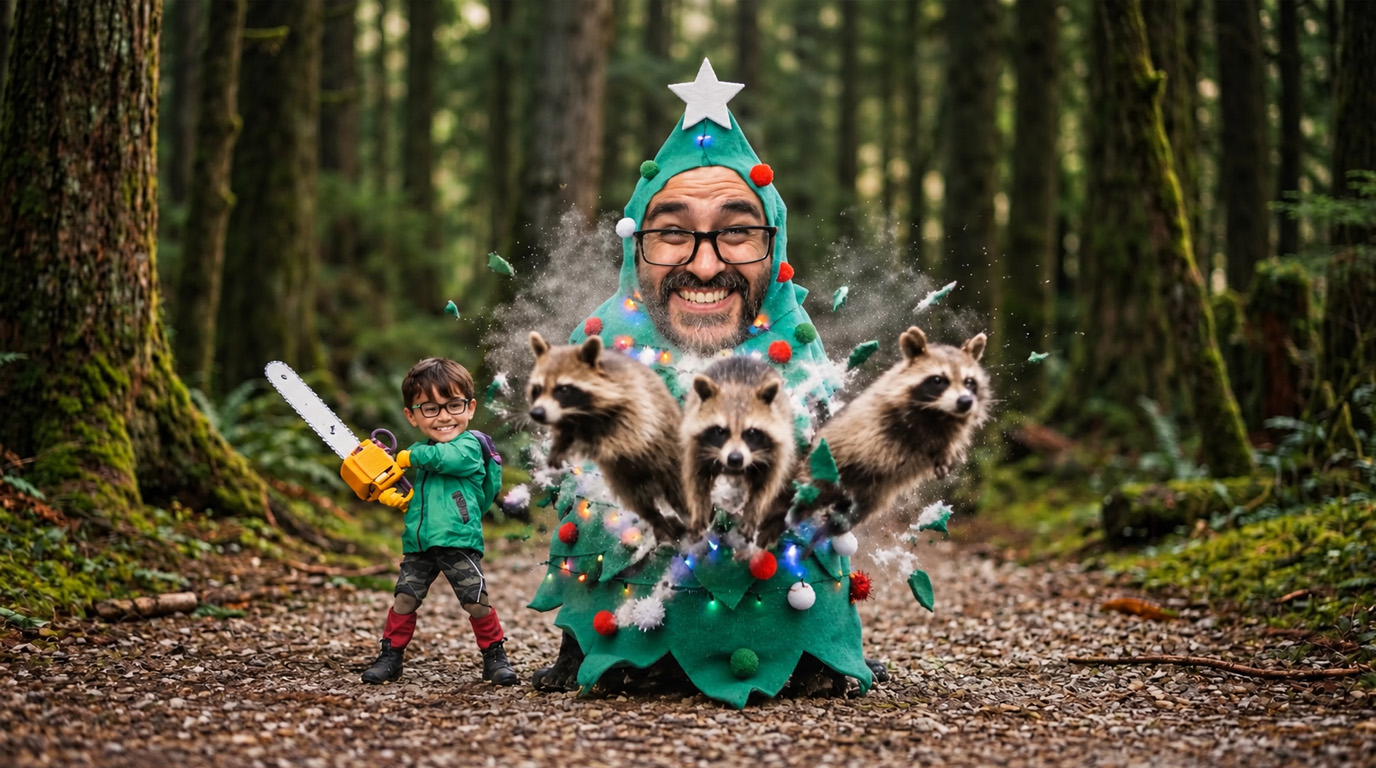
I’d created a funny image featuring one of my staff dressed as a Christmas tree, with his young son attempting to cut him down using a chainsaw. Nothing particularly gruesome. In fact, an earlier version featured an alien chestburster popping out of Dad’s torso, wearing a Santa hat and handing the boy a present. Adorable, really.
I’d recently begun experimenting with AI video generators, partly out of curiosity and partly because people in the creative department I managed were exploring the technology themselves. I figured I ought to understand what they were working with. Having accumulated some free credits, I decided to turn the Christmas tree idea into a little holiday greeting for the staff.
Think Wile E. Coyote meets National Lampoon’s Christmas Vacation, with a little Alien thrown in for good measure.
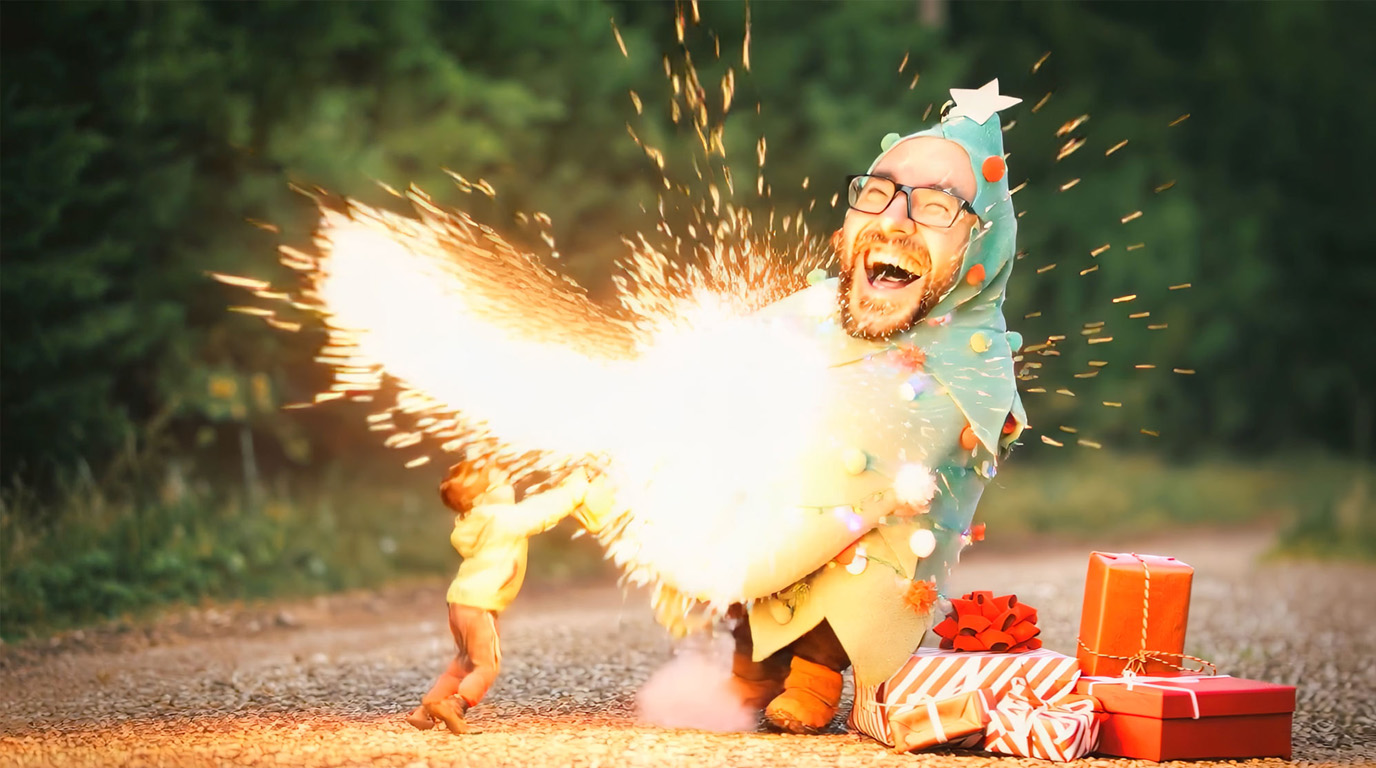
The premise was simple. The boy would repeatedly attack his father, who was dressed as a tree, and something unexpected would happen.
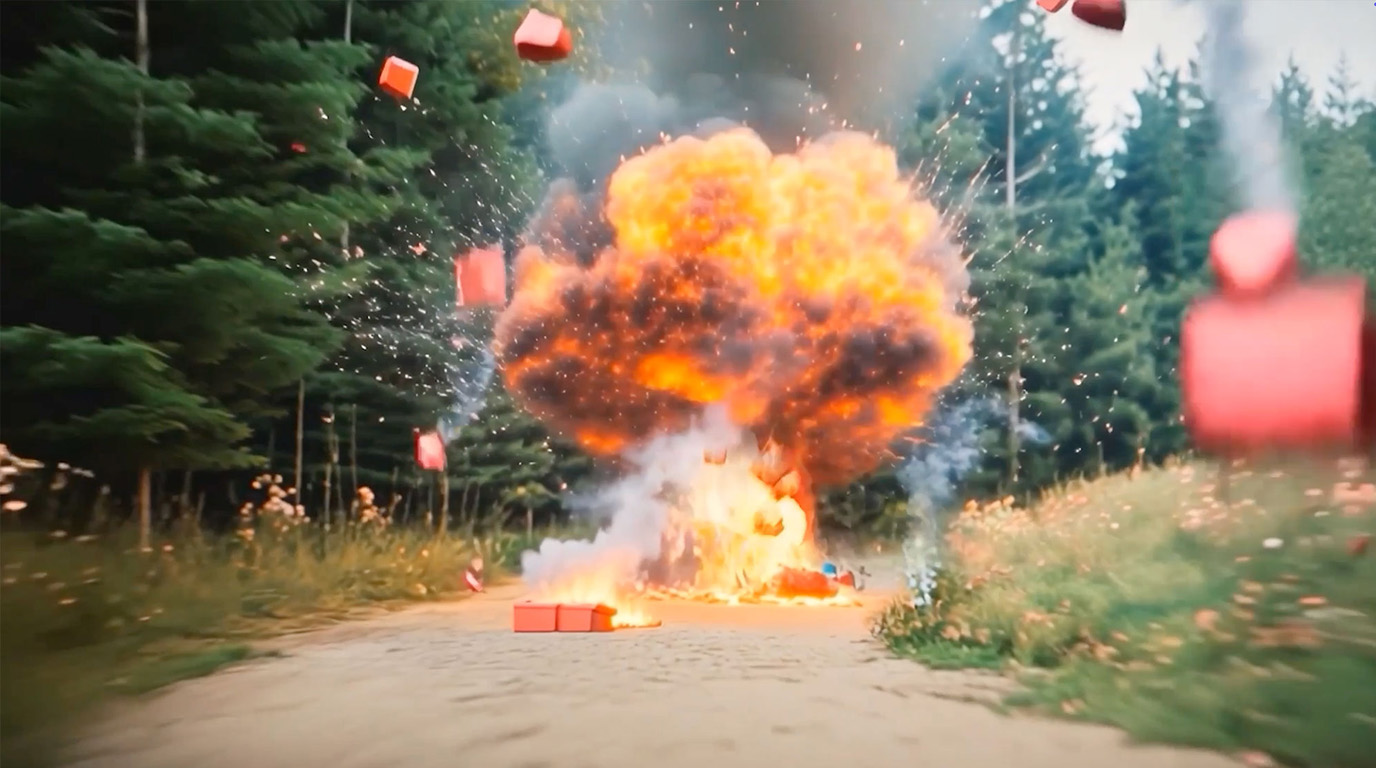
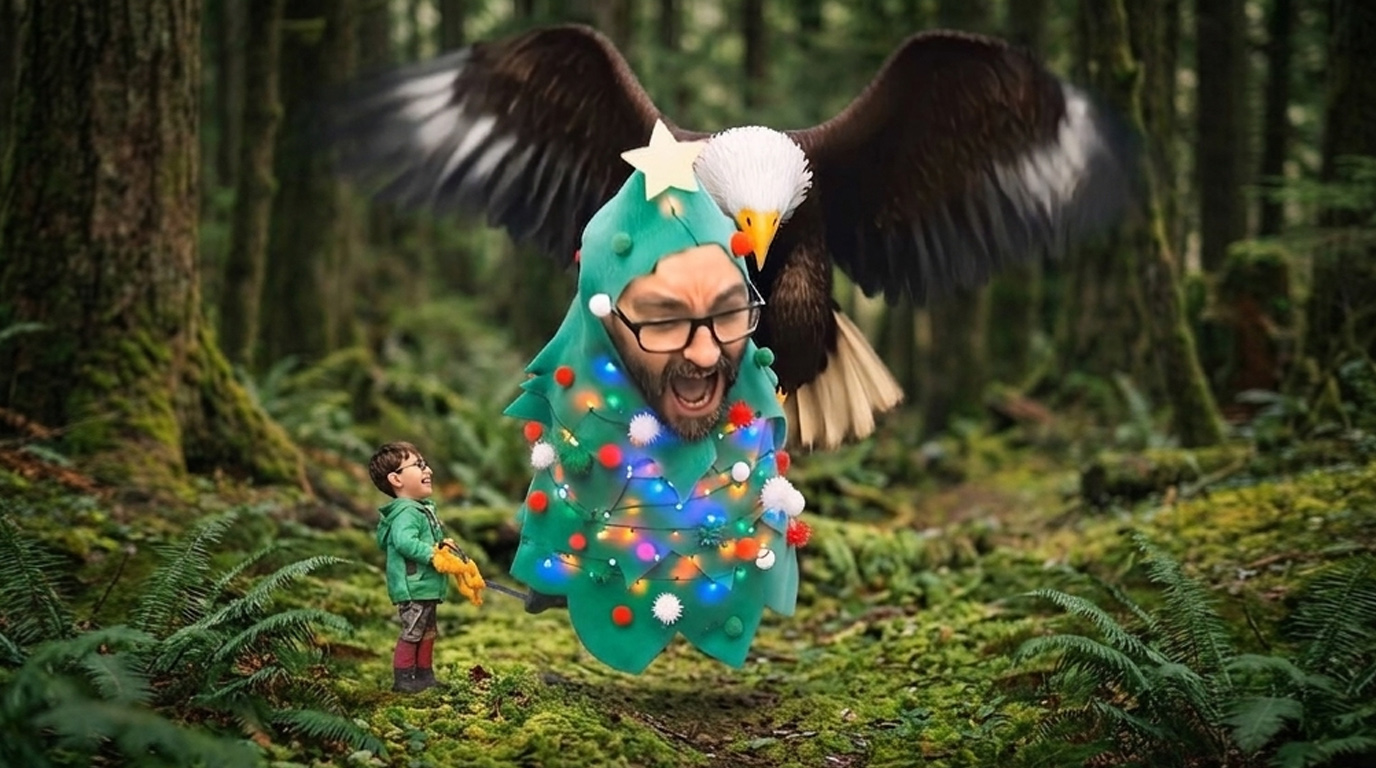
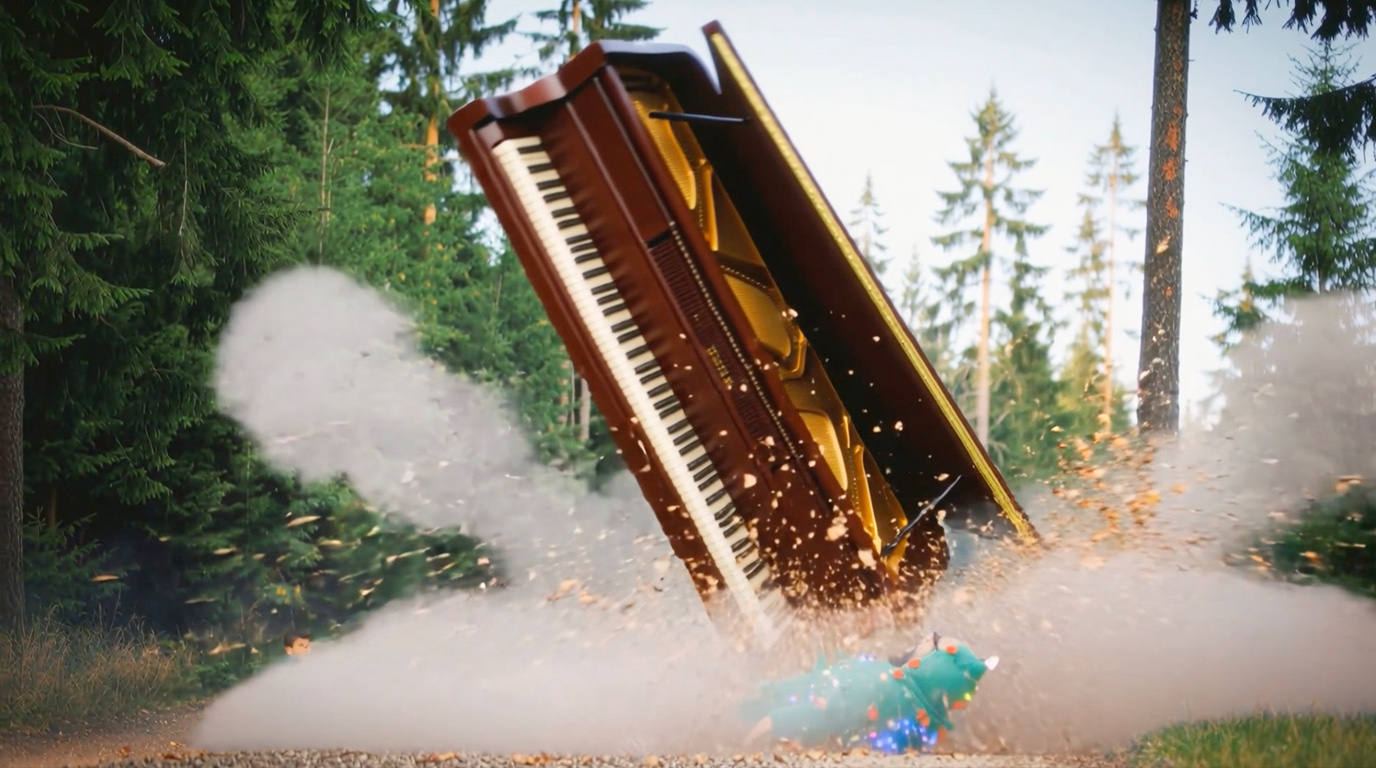
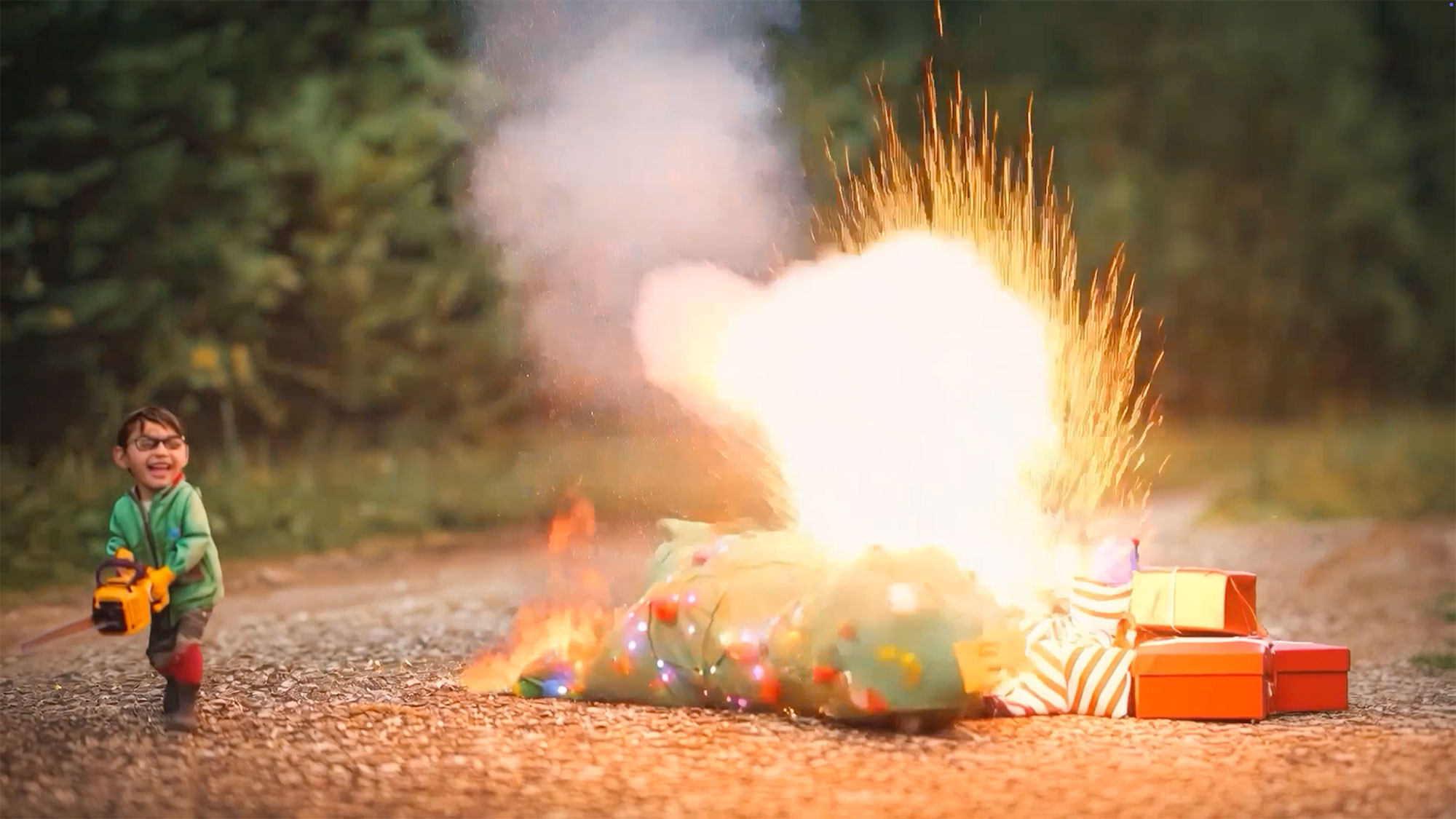
Sometimes presents popped out. Other times raccoons. An eagle swooped down and carried Dad away. Pianos fell from the sky. And for the grand finale, the tree simply exploded, setting the surrounding forest ablaze.
All accompanied by something akin to Metallica’s version of Carol of the Bells.
Christmas magic!
Now, before anyone starts drafting a letter to Child Protective Services, I should mention that the father had enthusiastically agreed to have his likeness used. He was also a creative himself, and we’d appeared together in other ridiculous videos for the staff. The characters were deliberately exaggerated and wildly out of proportion. It was cartoon slapstick, not an instructional video.
I uploaded the finished product to a newly created YouTube account, marked it private and sent him the link for approval.
He loved it. In fact, he suggested a few improvements.
Unfortunately, YouTube wasn’t quite so enthusiastic.
Unbeknownst to me, its moderation system had apparently flagged the video for violating its policy on bullying.
Yes. Bullying.
A grown man dressed as a Christmas tree, being assaulted by a miniature lumberjack who occasionally released woodland animals from his father’s torso, was evidently a troubling example of interpersonal harassment.
I never noticed the initial warning.
Within hours, I’d made the suggested improvements, deleted the original upload and posted the revised version as an unlisted video unavailable to the public, blissfully unaware that I was apparently a repeat offender.
The video survived long enough for the staff to see it the following day.
By end of the work day, having served its purpose, I’d decided to remove the video from my account.
YouTube had beaten me to it.
A second email informed me that, because I’d uploaded the offending material again, YouTube had decided to dispense with the whole “three strikes and you’re out” system outlined in their original warning and instead proceed directly to terminating my account.
Not suspended. Terminated.
Apparently, I’d managed to go from first-time offender to permanently unwelcome in less time than it takes Wile E. Coyote to fall off a cliff.
Naturally, I appealed.
The process suggested that my case would be reviewed, possibly taking some time. I submitted my explanation at roughly two in the morning, outlining the context, the consent and the deliberately absurd nature of the video.
Fifteen minutes later, my appeal was rejected.
Now, YouTube says it uses both automated systems and human reviewers, including humans for appeals. Perhaps some exceptionally efficient person reviewed my case at two in the morning. Perhaps not. I have no way of knowing.
What I do know is that the whole experience felt remarkably like arguing with a vending machine.
I wasn’t particularly devastated. I genuinely believed the ban applied to my YouTube account, not to me personally.
Perhaps that was naive, but I figured I could simply open another account using a different email address and carry on, having learned my lesson. I still felt the original decision was unjust, and believed that if an actual person took the time to understand what had happened, they’d probably agree. In any case, I certainly wasn’t planning to upload anything remotely similar again.
So I opened another account.
Which, as it turns out, was another mistake.
For about six months, everything was fine. I uploaded half a dozen considerably tamer videos, all of which passed YouTube’s copyright checks and attracted precisely zero viewers. Not one. Apparently, my new career as an internet sensation was off to a slow start.
Then, one day, the videos vanished from my website.
YouTube had discovered that I’d previously been banned and terminated the second account for circumventing the original restriction.
To be fair, that actually is against YouTube’s rules. I just hadn’t realized that my Christmas tree conviction followed me for life. I’m sure it’s outlined in their Terms of Use somewhere, policies I had every intention of reviewing… eventually. I was just surprised to see them applied so savagely to a video I had only intended for a limited audience of my choosing. Still no excuse, I know.
So that was that.
I eventually moved my videos to Rumble, a Canadian-founded platform with a generally more permissive approach to content moderation. My audience there is hardly threatening to rival Taylor Swift’s, but at least some people are watching.
Wow! I just checked and learned I have three followers! Hey, that’s three more than I ever had on YouTube!
And I haven’t been banished. Yet.
The whole episode got me thinking about something considerably larger than my failed attempt at festive entertainment.
We’re increasingly allowing automated systems to make decisions that require an understanding of context, intent and human behaviour.
And I’m not convinced that’s always a good idea.
There’s an irony here that isn’t lost on me. I used AI to help make the very video that may have been judged by AI and subsequently got me banned. I know there are plenty of people, particularly fellow artists, who have serious objections to the technology, and I understand why. I use it myself, which may make my criticism seem a little hypocritical. Fair enough. But using a technology doesn’t mean we have to be comfortable with everything it’s being used for.
And that’s really the distinction I’m interested in.
I understand why YouTube needs automated moderation. Hundreds of hours of video arrive every minute. No army of human reviewers could possibly examine everything before it appears online.
But identifying potentially problematic content and understanding it are two different things.
I’ve watched Star Wars fan videos on YouTube featuring lightsabers severing heads, complete with blood and considerably more realistic violence than anything in my Christmas greeting. Those videos remain available, while my surreal little holiday cartoon apparently crossed an unforgivable line.
Maybe there’s some perfectly reasonable explanation. Different contexts, different policies, different reviewers. But from the outside, the distinction seems rather difficult to defend.
And that’s the larger concern. As automated decision-making becomes more deeply embedded in hiring, banking, insurance, customer service and countless other areas, we’re increasingly trusting systems to make judgments about people without necessarily understanding the circumstances behind them.
A machine might recognize a chainsaw, a child and an adult being repeatedly attacked. What it may fail to recognize is a joke. Or consent. Or the difference between genuine cruelty and a man willingly dressing as a Christmas tree for the amusement of his coworkers.
Of course, humans make terrible decisions too. I’ve made quite a few myself. The Christmas video being an obvious example.
But when a decision has real consequences, there ought to be room for context, explanation and meaningful reconsideration. Whether the first judgment came from a person or a machine shouldn’t matter nearly as much as whether someone is willing to listen when it might have been wrong.
YouTube has since introduced a program allowing certain banned creators to apply for permission to start a new channel after a year. Maybe I’ll give it a try. Maybe I won’t.
In the meantime, my videos have found a home elsewhere, and I’ve come away with a story that’s probably funnier than the video itself.
Which, judging by the reaction of my staff to my odd little videos, isn’t saying much.
I’d still like to get back on YouTube someday, but with two offences on my record, I’m not holding my breath. I fear YouTube’s naughty list comes with a lifetime supply of coal.